
Understanding Neural Networks in Finance
In recent years, the financial sector has undergone a significant transformation thanks to the rise of neural networks. These advanced computational systems, designed to mimic the human brain’s neural connections, are driving innovations in various financial applications. This evolution is not only changing how institutions operate but also how they think about risk and opportunity in an increasingly volatile market.
One of the most profound impacts of neural networks is in data analysis. Financial markets generate colossal amounts of data every second, from stock prices to economic indicators. Traditional statistical methods struggle to sift through this data effectively. However, neural networks excel in identifying complex patterns and correlations within large datasets. For example, algorithms can analyze historical price movements, trading volumes, and even news sentiments to forecast future price trends with greater accuracy. Institutions like JPMorgan Chase and Goldman Sachs are already employing these technologies to refine their predictive capabilities and enhance their decision-making processes.
Another critical area where neural networks shine is in fraud detection. Financial fraud is a persistent challenge, costing institutions billions annually. Neural networks leverage their sophisticated pattern recognition abilities to spot anomalies and flag potential fraudulent activities in real time. For instance, companies such as PayPal and American Express use machine learning models to monitor transactions, identifying suspicious behavior that deviates from typical patterns. This not only protects institutions from financial loss but also enhances consumer trust.
In the realm of algorithmic trading, the advantages of neural networks are palpable. High-frequency trading firms utilize these algorithms to execute orders at lightning speed based on signals derived from vast datasets. This capability allows for optimal timing when buying or selling assets, potentially generating higher returns. The use of deep learning techniques can also refine trading algorithms, adapting them as market conditions evolve. Two prominent examples are Renaissance Technologies and Two Sigma, which deploy data-driven strategies that leverage neural networks to maximize trading efficiency.
In the United States, the integration of these technologies into financial services is yielding a clear competitive advantage. Firms that harness the power of neural networks not only position themselves ahead of rivals but also equip themselves to navigate the complexities of modern markets. Understanding the implications of these advancements is becoming increasingly essential for professionals across finance.
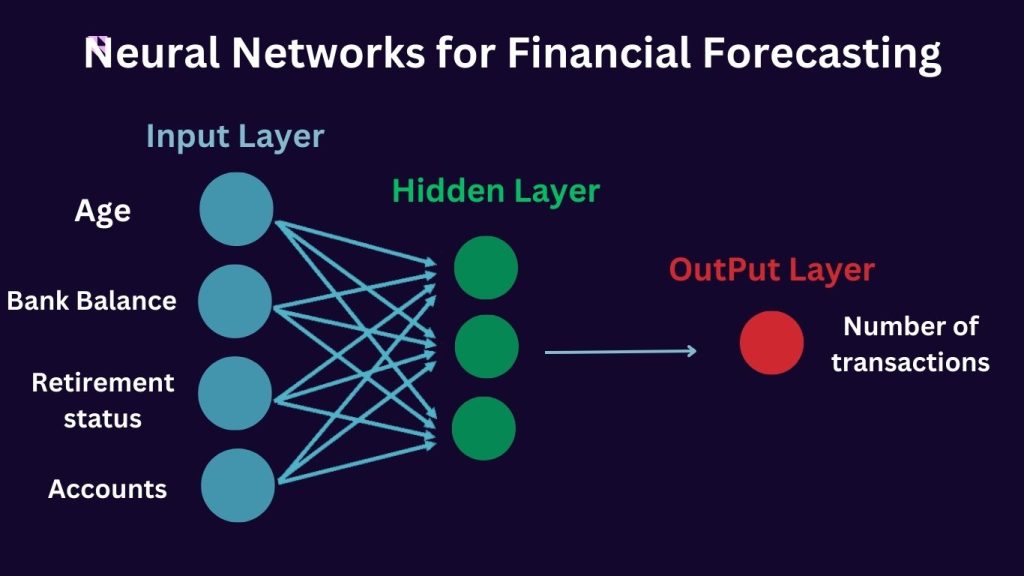
However, while the benefits are substantial, it’s important to acknowledge the challenges that accompany such innovations. Issues of data privacy, algorithmic bias, and the potential for job displacement are at the forefront of conversations surrounding AI in finance. As stakeholders delve deeper into the impact of machine learning, they uncover both the transformative power of these technologies and the responsibility that comes with utilizing them effectively. Exploring these dynamics can provide valuable insights into the future of finance in an AI-driven world.
DISCOVER MORE: Click here for additional insights
Revolutionizing Financial Forecasting with Neural Networks
The advent of neural networks in finance has propelled forecasting capabilities to unprecedented heights. Traditionally, financial forecasting relied heavily on linear models and statistical methods which, while useful, often fell short when confronting the inherent volatility of financial markets. As market conditions change rapidly, the ability to analyze vast amounts of data with precision is paramount. By utilizing deep learning algorithms, financial institutions are now capable of executing a level of analysis that was previously unimaginable.
Neural networks operate by processing input data through various layers, enabling them to learn intricate relationships and patterns. This process is particularly beneficial for predicting market movements. For example, by inputting multiple variables—ranging from historical prices and macroeconomic indicators to social media sentiment—neural networks can generate forecasts that account for a multitude of factors influencing the market.
To illustrate the power of neural networks in financial forecasting, consider the following applications:
- Stock Price Prediction: Advanced algorithms can utilize historical stock price data together with factors like trading volume and earnings reports to anticipate future movements.
- Economic Forecasting: By analyzing macroeconomic indicators, neural networks can help predict economic downturns, inflation rates, and other significant changes affecting financial markets.
- Credit Scoring: Institutions are applying neural networks to evaluate credit risk, improving the accuracy of lending decisions by analyzing borrower behavior patterns.
Moreover, the adaptability of these models makes them particularly appealing. With the ability to retrain on new data, neural networks can adjust their predictions as market dynamics shift, providing a distinct advantage during turbulent periods. Firms equipped with these capabilities can make more informed decisions, allowing them to seize opportunities and mitigate risks effectively.
The integration of neural networks extends beyond mere forecasting; it also enhances risk analysis. In an industry where the cost of poor decisions can be monumental, robust risk management is crucial. Neural networks contribute to this by enabling institutions to model complex risk scenarios. By simulating various market conditions, they can identify potential threats and assess the implications of their investment strategies on overall portfolio risk.
As a case in point, Bank of America and Wells Fargo have implemented machine learning models to refine their risk assessment processes. These systems analyze credit histories, macroeconomic indicators, and even geopolitical developments to evaluate and adjust for risk on an ongoing basis. This real-time assessment is invaluable for institutions that seek to protect their interests in a landscape fraught with uncertainty.
However, while the promise of neural networks in finance is substantial, the challenges they present cannot be overlooked. Issues such as data quality, regulatory compliance, and the potential for model bias require careful consideration and management. As financial institutions continue to explore these innovative solutions, the balance between leveraging their capabilities and addressing inherent risks will define the future of finance.
| Advantage | Description |
|---|---|
| Enhanced Predictive Accuracy | Neural networks can analyze vast datasets to uncover complex patterns, leading to better forecasts for market trends. |
| Real-Time Risk Management | Through continuous learning, neural networks enable financial institutions to assess risk dynamically and adjust strategies accordingly. |
The Growing Relevance of Neural Networks
Neural networks are increasingly relevant within the financial industry, particularly in forecasting and risk analysis. By leveraging algorithms that mimic human cognitive functions, these systems can manage and analyze real-time financial data. This is crucial in a volatile market where rapid decision-making is essential for success.Moreover, through the application of machine learning techniques, financial institutions can harness the power of neural networks to reduce the probability of losses. By identifying potential risks before they manifest, firms can safeguard their investments and optimize portfolios more effectively.The emergence of deep learning techniques has further enhanced predictive models, making them a vital tool for both institutional and retail investors. In a rapidly changing financial landscape, the use of neural networks provides innovative solutions to traditional challenges in forecasting and risk management, paving the way for smarter investment strategies.
DISCOVER MORE: Click here to unlock further insights
Enhancing Fraud Detection and Compliance with Neural Networks
In an era where financial transactions are increasingly conducted online, the necessity for robust fraud detection mechanisms has never been more urgent. Neural networks have emerged as a powerful tool in this domain, utilizing their ability to identify unusual patterns in vast datasets to flag potentially fraudulent activities. Traditional methods, which often rely on predefined rules, are no longer sufficient to combat sophisticated fraudulent schemes that evolve continuously.
By employing unsupervised learning techniques, neural networks can analyze transaction data without prior labeling. This means they can detect anomalies in real-time, alerting firms to potential fraud before it results in significant losses. Institutions such as American Express and PayPal have successfully implemented machine learning models that continuously learn from new transaction data to improve their detection systems, thereby safeguarding customer assets while enhancing the institution’s reputation for security.
Moreover, the integration of neural networks promotes regulatory compliance, an increasingly critical area in the financial sector. With regulations such as the Bank Secrecy Act and the Anti-Money Laundering (AML) laws, institutions face severe penalties for non-compliance. Neural networks can efficiently analyze suspicious transaction patterns that may indicate money laundering or compliance failures. By automating this process, banks can reduce back-office burdens and focus on strategic decision-making while ensuring adherence to necessary regulations.
Additionally, neural networks pave the way for improving customer service in the financial industry. With customer experience becoming a key differentiator, institutions are leveraging AI-driven chatbots powered by neural networks to provide 24/7 customer support. These advanced systems can handle inquiries, process transactions, and even detect customer sentiment, offering personalized assistance at unprecedented speeds. This not only enhances client satisfaction but also reduces operational costs, enabling firms to allocate resources more effectively.
The insurance sector is also witnessing a transformation due to neural networks. By analyzing historical claims data, neural networks offer insurers a sophisticated approach to risk assessment and premium pricing. Additionally, they can optimize claims processing through quicker analysis and decision-making. In practice, firms like Progressive Insurance utilize these insights to adjust policies in real-time, aligning their offerings with individual risk profiles while maintaining competitive pricing.
Despite these advancements, the deployment of neural networks in finance is not without risks. Issues surrounding data privacy remain paramount as firms gather and analyze vast amounts of sensitive financial information. Ensuring compliance with regulations such as the General Data Protection Regulation (GDPR) is essential to maintain consumer trust and avoid legal repercussions. Furthermore, reliance on algorithms raises concerns regarding transparency and accountability, particularly in high-stakes financial decisions where model biases can lead to unethical outcomes.
As financial institutions venture deeper into the realm of neural networks, the challenge lies in managing these risks while harnessing the technology’s potential. By balancing innovative practices with ethical considerations and strict compliance measures, the financial industry can navigate this complex landscape and redefine its future.
DISCOVER MORE: Click here for further insights
Conclusion: The Future of Neural Networks in Finance
The implementation of neural networks in the financial industry has heralded a significant transformation that touches every facet, from fraud detection and regulatory compliance to risk analysis and customer service. As institutions embrace this cutting-edge technology, they are not only improving operational efficiencies but also enhancing the safety and security of their transactions. The ability of neural networks to learn and adapt in real time equips firms with the agility to respond to evolving threats and market conditions, a critical advantage in today’s fast-paced financial landscape.
Moreover, as neural networks facilitate more accurate forecasting and data-driven decision-making, they open new avenues for financial innovation and growth. For instance, the fine-tuning of premium pricing by insurers using these models illustrates a move toward highly personalized financial products, tailored specifically to individual risk profiles. Such advancements contribute to a more robust competitive environment, benefiting consumers while simultaneously driving performance for financial institutions.
Nevertheless, the rise of these technologies brings inherent challenges, particularly relating to data privacy and algorithmic bias. As regulatory scrutiny increases, organizations must prioritize transparency and ethical considerations in their implementations. The journey ahead involves striking a delicate balance between leveraging the capabilities of neural networks and ensuring robust protective measures for consumers’ sensitive information.
In conclusion, the impact of neural networks on the financial industry is profound and multifaceted. As we stand on the brink of further advancements, ongoing research and ethical deliberation will be essential in shaping the future. The potential for growth and improved risk management is vast, inviting industry stakeholders to explore and harness these innovations responsibly for better financial services and enhanced customer experiences.
Related posts:
Convolutional Neural Networks: Transforming Computer Vision
The Evolution of Neural Networks: From Perceptron to Deep Learning
Neural Networks and Sustainability: Applications in Renewable Energy and Energy Efficiency
The Evolution of Neural Networks: From Perceptrons to Deep Learning Models
The Impact of Neural Networks on Natural Disaster Prediction
Ethical and Transparency Challenges in Neural Networks: What We Need to Know

Beatriz Johnson is a seasoned AI strategist and writer with a passion for simplifying the complexities of artificial intelligence and machine learning. With over a decade of experience in the tech industry, she specializes in topics like generative AI, automation tools, and emerging AI trends. Through her work on our website, Beatriz empowers readers to make informed decisions about adopting AI technologies and stay ahead in the rapidly evolving digital landscape.