
The Evolving Role of Technology in Agriculture
The agricultural landscape is undergoing a monumental transformation, fueled by the integration of robotics and artificial intelligence (AI). As farmers grapple with the increasing pressures of population growth, climate change, and the demand for sustainable practices, they are increasingly turning to AI-driven agricultural automation. This shift not only aspires to boost productivity but also aims to fundamentally change traditional farming practices, ushering in a new era of agricultural efficiency.
One of the most significant trends shaping the future of farming is Precision Farming. This practice encompasses the use of advanced technologies such as drones and robotic systems for tasks like soil analysis and crop monitoring. For instance, drones equipped with multispectral sensors can capture detailed images of fields, allowing farmers to assess crop health, detect pest infestations, and evaluate water stress with remarkable accuracy. This kind of data-driven decision-making empowers farmers to optimize yields while minimizing resource usage, setting the stage for a more efficient agricultural model.
Another trend is Automated Harvesting, which is rapidly transforming how crops are collected. As the labor force in agriculture ages and faces shortages, robotic harvesters are stepping in to fill the gap. Companies like Harvest CROO Robotics have developed machines that can autonomously pick strawberries, effectively reducing human labor by up to 30%. These robotic systems are designed to recognize ripe fruit and collect it with precision, subsequently improving the speed at which produce reaches markets and reducing food waste.
In addition to crop harvesting, Livestock Management is benefiting from technological advancements as well. Modern robots equipped with AI capabilities can monitor animal health and behavior in real-time, providing farmers with crucial insights. For example, robotic systems can detect changes in a livestock’s eating patterns, alerting farmers to potential health issues before they escalate. This proactive approach not only enhances animal welfare but also fosters higher productivity in livestock farming.
Embracing robotics in agriculture has the potential to substantially lower labor costs and elevate crop yields. A prime example lies in the targeted application of pesticides, which can be significantly reduced through the use of precision application techniques. By applying inputs only where needed, farmers can also lessen their environmental impact while maintaining high productivity levels. Furthermore, advancements in machine learning are equipping these systems to become increasingly adaptive, enabling them to learn and enhance their performance based on varying agricultural conditions.
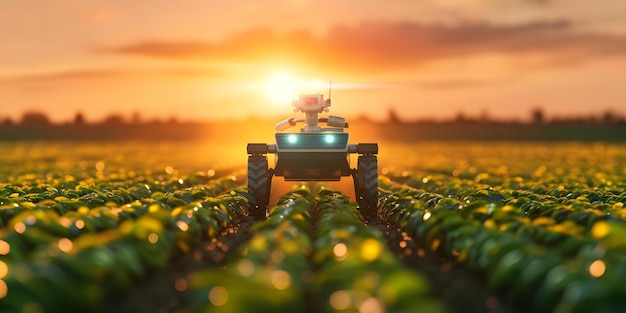
However, as this journey unfolds, it is crucial for stakeholders to navigate the implications on workforce dynamics, ethical considerations, and environmental sustainability. The integration of robotics poses questions about job displacement, the cost of technology adoption, and the responsibility for ensuring equitable access to these innovations. Ultimately, while the potential of robotics in agriculture presents a promising landscape of efficiency, it simultaneously challenges conventional farming paradigms, inciting discussions about the future of food production in the United States and beyond.
DISCOVER MORE: Click here for additional insights
Transforming Traditional Farming Methods
The integration of robotics in AI-driven agricultural automation is not merely a trend—it’s a revolution that promises to alter
the very fabric of agriculture. Farmers across the United States are increasingly adopting automation technologies to enhance operational efficiency, cater to ever-growing food demands, and promote sustainable practices. This transformation propels the industry closer to a vision of smart farms where data-driven decisions are made in real-time.
A pivotal aspect of this transformation is the development of Smart Equipment. Agricultural robots equipped with sophisticated AI algorithms can perform a range of tasks, from planting seeds to applying fertilizers with pinpoint accuracy. For instance, robotic planting systems can use real-time soil data to determine optimal planting depth and spacing, resulting in better crop establishment and resource conservation. By automating these labor-intensive processes, farmers can ensure that crops receive the attention they need while maximizing land efficiency.
Moreover, the rise of AI-based Data Analytics allows farmers to harness vast amounts of data generated by their operations. These systems can analyze factors such as weather patterns, soil moisture levels, and crop conditions to provide insights that inform better planting schedules and resource allocation. The shift toward data-driven farming is bolstered by the Internet of Things (IoT), where sensors placed throughout the farm collect real-time data and transmit it to centralized systems. This connectivity fosters a holistic view of farm operations, equipping farmers with the tools needed to drive informed decisions and enhance productivity.
Robotics integration offers solutions not only for crop management but also for improving Resource Efficiency. By utilizing autonomous systems for irrigation and fertilization, farmers can minimize the environmental impact associated with excess water and chemical runoff. Technologies such as precision irrigation systems enable the targeted delivery of water directly to the roots of plants, decreasing waste and promoting healthier crops. Similarly, robotic systems can apply fertilizers only where necessary, drastically reducing the quantity used and fostering sustainability within the industry.
As this shift towards AI-driven automation gains momentum, various stakeholders within the agricultural sector must consider its implications. Below are key advantages that robotics integration presents:
- Increased Productivity: Automation enhances the efficiency of farm operations, allowing for more crops to be grown in less time.
- Cost Reduction: Labor costs can significantly decrease as machines take over time-consuming tasks.
- Sustainability: With precision methods, farmers can reduce their resource consumption and environmental footprint.
- Data-Driven Insights: AI analytics provide farmers with actionable insights, allowing them to make data-backed decisions for crop management.
Despite these advantages, the integration of advanced robotics inevitably raises questions about accessibility and economic inequality. Smaller farms may find it challenging to adopt these technologies due to high initial costs, potentially widening the gap between large agribusinesses and smaller operations. Addressing these challenges will demand collaborative efforts among technology providers, farmers, and policymakers to ensure widespread benefits from this agricultural revolution.
| Advantages | Impact on Agriculture |
|---|---|
| Increased Efficiency | Robotics, when integrated with AI, can enhance precision in tasks such as planting, watering, and harvesting crops, significantly reducing resource waste. |
| Cost Reduction | Automated systems decrease labor costs over time and minimize expensive errors, allowing farmers to allocate resources more effectively. |
| Data-Driven Decisions | AI analytics provide farmers with actionable insights, predicting crop yields, disease outbreaks, and optimal harvest times. |
| Sustainability | Robotic systems encourage environmentally friendly practices by optimizing water usage and minimizing chemical applications. |
As we explore the future of robotics in AI-driven agricultural automation, it’s clear that these advanced technologies are reshaping the agricultural landscape. The integration of robotics not only promises to improve yield but also ensures that farming practices become more eco-conscious. Moreover, as AI continues to evolve, the synergy between human farmers and robotic assistants will redefine productivity standards and open up new avenues for agricultural innovation. With continuous advancements, the potential benefits are immense, transforming how food is produced and distributed around the globe. This progress signifies a pivotal shift towards a more sustainable and efficient agricultural ecosystem.
DISCOVER MORE: Click here to learn more
Enhancing Precision and Minimizing Risks
As the robotics revolution in agriculture continues to unfold, one of the most notable advancements is the integration of AI-powered machine learning algorithms. These systems can rapidly process and analyze data, enabling farmers to customize their practices according to specific crop needs and environmental conditions. For example, predictive analytics tools can forecast pest infestations or plant diseases before they manifest, allowing farmers to take preventive measures that minimize crop loss. This capability not only maximizes yield but also reduces the reliance on chemical pesticides, contributing to a healthier ecosystem.
The introduction of collaborative robots (cobots) is another significant stride forward. Unlike traditional robots that work independently, cobots are designed to assist human workers, enhancing their productivity and safety. In a farming context, these robots can handle physically demanding tasks, such as lifting heavy materials or performing repetitive manual work. By alleviating the physical toll on workers, cobots not only enhance efficiency but also improve job satisfaction and retention in an industry grappling with labor shortages.
Moreover, the advancements in robotic autonomy play a critical role in expanding the capabilities of agricultural operations. Automated vehicles, capable of navigating fields without direct human control, can perform a variety of tasks across vast terrains, such as plowing, fertilizing, and harvesting. Notably, autonomous tractors outfitted with GPS and AI are able to carve precise paths through fields, drastically reducing soil compaction and improving field health. This technology ensures not only a higher yield per acre but also strengthens the sustainability of our farmland.
In addition to enhancing operational efficiency, robotics integration in AI-driven agriculture is breaking down geographical barriers. The use of drone technology for aerial imaging and crop monitoring illustrates this trend perfectly. Drones equipped with multispectral cameras provide farmers with actionable insights into crop health and moisture levels across large areas. This scalability allows even small-scale farmers to compete with larger operations by adopting high-tech solutions that were once reserved for those with significant resources.
Furthermore, the burgeoning field of biometric sensors represents a frontier in robotics integration. These sensors can continuously monitor plant health and soil conditions in real time. For instance, innovative cotton-growing techniques utilizing biometric sensors ensure that farmers have immediate feedback on water and nutrient levels, facilitating timely interventions that can optimize growth conditions. By leveraging these smart technologies, farmers can capitalize on resources more effectively, ensuring a reduction in waste and promoting conservation practices.
While the benefits of these innovations are clear, the path forward is not without challenges. As robotic systems continue evolving, ensuring data security and privacy becomes increasingly essential. The collection and analysis of vast amounts of information could leave sensitive farm data vulnerable to cyber threats, necessitating robust cybersecurity measures and policies to protect farmers’ interests. Additionally, ethical considerations surrounding job displacement and the future workforce must be prioritized to ensure that advancements in agricultural automation benefit all stakeholders.
As we glimpse into the future of robotics integration in AI-driven agricultural automation, it is evident that the evolution of the industry will hinge not only on technological innovation but also on collaboration. Engaging a diverse array of stakeholders—including farmers, technologists, and policymakers—will be crucial in navigating the complexities of this exciting new landscape.
DISCOVER MORE: Click here for additional insights
Conclusion: Embracing the Robotic Revolution in Agriculture
As we stand on the brink of a new era in agriculture, the integration of robotics and AI-driven automation is set to redefine farming practices and productivity. The advancements we have witnessed—ranging from collaborative robots (cobots) enhancing labor efficiency to autonomous vehicles revolutionizing fields—demonstrate an optimistic future where precision agriculture thrives. These technologies not only promise to boost yields and minimize resource waste, but they also enhance sustainability practices that are critical in an era of climate change.
Moreover, the democratization of high-tech solutions, exemplified by drones and biometric sensors, ensures that small-scale farmers can also leverage innovative tools to remain competitive. However, this rapid evolution comes with challenges that cannot be ignored. Issues such as data security, ethical labor practices, and the potential displacement of workers demand proactive discussions and collaborative governance. Ultimately, the future of agricultural automation hinges on finding a balance between cutting-edge technology and human interests.
As stakeholders—from farmers to policymakers—work hand-in-hand to navigate this complex landscape, it is crucial that they prioritize education and support systems that will facilitate the smooth integration of these advances. By doing so, we can harness the full potential of robotics integration in agriculture, ensuring that it is not just a passing trend but a transformative force that sustains our food systems for generations to come.
Related posts:
The Revolution of Industry 4.0: How the Integration of Robotics with Artificial Intelligence is Tran...
The Role of Robotics Integration in Enhancing AI-Powered Manufacturing Processes
The Intersection of Robotics Integration and AI in Environmental Conservation Efforts
Integrating Robotics with AI for Disaster Response: Innovations and Challenges
Ethical Challenges in Integrating Robotics and Artificial Intelligence: The Future of Work and Auton...
Robotics and AI in Education: Personalization of Learning Through Technology

Beatriz Johnson is a seasoned AI strategist and writer with a passion for simplifying the complexities of artificial intelligence and machine learning. With over a decade of experience in the tech industry, she specializes in topics like generative AI, automation tools, and emerging AI trends. Through her work on our website, Beatriz empowers readers to make informed decisions about adopting AI technologies and stay ahead in the rapidly evolving digital landscape.