
Advanced Technology in Space Exploration
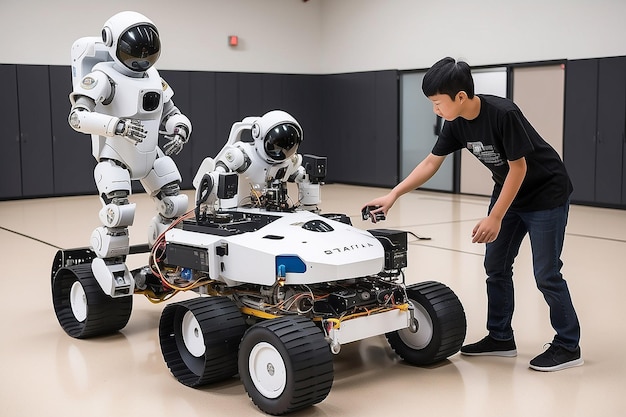
As humanity strides further into the cosmos, the necessity for advanced technology becomes paramount. The integration of robotics and artificial intelligence (AI) is reshaping the way we approach space exploration, introducing innovative solutions to age-old challenges. The progression of these technologies is not merely about enhancement; it represents a fundamental shift in how we understand and interact with the universe.
Consider the following benefits of this integration:
- Autonomous Decision-Making: AI systems empower robots to make critical decisions in real-time, enhancing mission efficiency. For instance, the Mars Rover Perseverance utilizes AI algorithms to navigate treacherous terrain autonomously. This capability allows it to choose the safest paths and prioritize mission objectives without waiting for instructions from Earth, which can take several minutes due to communication delays.
- Complex Task Execution: Robots can perform intricate tasks such as conducting repairs and maintenance on spacecraft without direct human intervention. The International Space Station (ISS) utilizes robotic arms, like Canadarm2, to assist astronauts in performing complex assembly jobs and even relocating modules. This not only saves time but also reduces the risks associated with spacewalks.
- Data Analysis: The vast amounts of data collected from space missions require sophisticated analysis tools. AI enhances our ability to process this information effectively. For example, the Hubble Space Telescope generates terabytes of data that AI helps to sift through, identifying patterns and anomalies that human scientists might overlook, thus leading to groundbreaking discoveries.
The ongoing collaboration between engineers and scientists is opening new windows into the universe. Groundbreaking missions such as NASA’s Mars rovers and the European Space Agency’s Rosetta emphasize the potential of robotics integration in executing sophisticated tasks effortlessly. The success of these missions showcases not only the technical prowess involved but also the critical role that AI plays in optimizing outcomes across various phases of exploration, from mission planning to execution.
As we delve deeper into this synergy, the implications for future space exploration are immense. By leveraging these advancements, we can anticipate remarkable discoveries that may redefine our understanding of the universe and our place within it. Moreover, the integration of these technologies might allow humanity to explore locations once deemed unreachable, such as the ice geysers of Europa or the atmosphere of Venus, vastly expanding our frontiers.
In summary, robotics and AI stand as beacons of innovation, guiding us toward a future where the stars are within our grasp. As researchers continue to refine these technologies, we will likely witness a golden age of space exploration, raising profound questions about life beyond Earth and the vastness of the cosmos.
DISCOVER MORE: Click here to learn more
Transforming Space Missions Through Robotics and AI
The advent of robotics integration within space missions has revolutionized how we conduct exploration. This convergence of technology not only enhances operational capabilities but also significantly broadens the horizons of what can be achieved in outer space. As organizations like NASA, ESA, and private space enterprises continue to push the boundaries, the role of robots equipped with artificial intelligence (AI) becomes more critical in overcoming the complexities of space travel.
One significant transformation brought about by this integration is in the realm of remote collaboration. Astronauts aboard the ISS can now communicate and coordinate with robotic systems in real-time, allowing for seamless collaboration in dynamic environments. For example, a humanoid robot developed by NASA, named Robonaut 2, has been designed to assist astronauts with various tasks. By utilizing machine learning algorithms, Robonaut 2 learns from human behavior and can effectively respond to instructions, making it a vital partner in daily operations beyond Earth.
Moreover, the efficiency gained from robotic systems is critical in deep-space missions where human presence is limited. Robotic probes can be deployed to explore celestial bodies and gather vital data without risking human lives. The Voyager probes, launched in the 1970s, have traveled farther than any human-made object, revealing insights into the outer planets and interstellar space. Their success has paved the way for current robotic missions to asteroids and comets, such as NASA’s OSIRIS-REx, which is set to bring back samples from asteroid Bennu. This mission exemplifies how robotic integration can lead to significant advancements in our quest for understanding the universe.
In addition to exploration, robotics and AI play crucial roles in enhancing safety protocols. With autonomous robots capable of conducting repairs and maintenance tasks, astronauts can spend more time focusing on scientific research. Robots equipped with AI can monitor the health and performance of spacecraft systems in real-time, quickly identifying potential failures. This proactive approach boosts operational safety and minimizes risks associated with space travel, especially in high-stakes environments such as deep-space missions.
- Increased Productivity: Robots can operate continuously without the need for rest, allowing for more work to be accomplished in shorter timeframes.
- Remote Operations: AI-enhanced robots can handle tasks on celestial bodies without immediate human supervision, addressing the challenges of communication delays.
- Improved Precision: Advanced AI algorithms allow robots to execute tasks with precision, minimizing errors and ensuring mission integrity.
The synergistic relationship between robotics and AI is driving humanity into an extraordinary new phase of space exploration. As we continue to refine these technologies and explore their potential applications, the future promises a wealth of opportunities to unlock the mysteries of the universe. The target efforts of both public and private entities in leveraging this powerful integration will likely lead to unprecedented achievements, transforming our understanding of the cosmos and our ability to traverse it.
| Advantage | Benefit |
|---|---|
| Automated Data Collection | Robotic systems can efficiently gather vast amounts of environmental data from distant planets, providing invaluable insights for AI analysis. |
| Increased Mission Success Rates | Integrating AI with robotics reduces human error and enhances decision-making speed, crucial for successful exploration in unpredictable space conditions. |
| Real-Time Problem Solving | AI-enabled robotics allow for real-time adjustments to mission parameters, optimizing operations and resource utilization while on exploratory missions. |
| Enhanced Communication | Advanced robotic systems equipped with AI algorithms improve data transmission and processing, ensuring timely insights during missions. |
The integration of robotics and AI into space exploration is revolutionizing our approach to the cosmos. These technologies not only augment human capabilities but also bring forth a plethora of opportunities for exploration at unprecedented levels. Exploring how automated systems gather data and make critical decisions in real time leads to a better understanding of other worlds. The future of space missions is bright, with robotics integration paving the way for groundbreaking discoveries. With the potential for untold advancements, leveraging these technologies can indeed change the trajectory of human presence in space. From real-time communication enhancements to efficient problem-solving capabilities, the possibilities are immense and warrant a deeper exploration.
DIVE DEEPER: Click here to discover more insights
Expanding Horizons: Robotics and AI in Interplanetary Exploration
As humanity sets its sights on more ambitious missions, such as crewed missions to Mars or the establishment of lunar bases, the integration of robotics and AI continues to pave the way for innovative solutions that tackle the unique challenges of interplanetary exploration. One standout example of this synergy is the Perseverance rover, launched by NASA in 2020 with the mission of seeking signs of ancient life on Mars and collecting rock samples for future return to Earth. Equipped with a suite of advanced AI-driven tools, Perseverance is capable of autonomous navigation, allowing it to make real-time decisions to avoid hazards in its path. This level of autonomy is crucial given the communication delays with Earth, which can take up to 20 minutes.
Additionally, flagging potential areas for further analysis is a significant leap forward. The onboard AI system can process vast amounts of data and prioritize scientific targets, optimizing the mission’s overall efficiency. As robots become smarter, they will play an increasingly prominent role in scouting previously uncharted territories, gathering unprecedented data that can refine our understanding of planetary science.
The applications of robotics integration in AI-enhanced space exploration extend beyond surface operations. For instance, the European Space Agency (ESA) is actively developing the European Robotic Arm, set to be deployed on the Russian segment of the ISS. This versatile robotic manipulator will assist in maintenance tasks and the assembly of new equipment, all while being operated by astronauts on the ISS or remotely from Earth. The incorporation of AI algorithms into these robotic systems allows them to adapt to various tasks, ensuring operational flexibility and reducing human workloads in space.
Rover and Drone Synergies
The fusion of rovers and drones represents another noteworthy frontier in space exploration. Using aerial drones in tandem with ground-based rovers can provide a multi-faceted approach to data collection. For instance, the upcoming Mars Sample Return mission is expected to employ drone technology to conduct aerial surveys, rendering detailed maps of the Martian surface that can be leveraged by ground rovers. By combining the strengths of both platforms, mission teams can gain a comprehensive understanding of the environment and optimize sample collection strategies, creating synergies that augment scientific return.
Moreover, these adaptations are vital in overcoming the environmental challenges posed by celestial bodies such as the Moon or Mars. For example, the lunar regolith presents substantial challenges for landing gear; however, autonomous drones can help identify and even navigate around hazardous terrain, optimizing landing sites for future spacecraft. The robotic systems can operate in these harsh environments, providing invaluable insights without risking human life.
Building Sustainable Habitats
As we move towards establishing sustainable habitats on celestial bodies, robotics integration will be pivotal in constructing infrastructure needed for long-term missions. Robotic systems can automate the construction of habitats, utilizing local resources to create buildings and essential structures that meet human needs. NASA’s recent project, which tests 3D printing technology using lunar soil, showcases the potential of autonomous robots as construction workers, ultimately promoting sustainability in extraterrestrial environments.
The future of space exploration is brighter than ever, propelled by the dynamic capabilities of AI-enhanced robotics. As the United States and its global partners continue to invest in these advanced technologies, the prospects for expansive, safe, and efficient missions into the cosmos are becoming increasingly tangible. The opportunity to learn more about our solar system and beyond is not just a dream but is becoming a reality, thanks to the monumental advancements in robotics and AI.
DON’T MISS OUT: Click here to discover more
Conclusion: The Dawn of a New Era in Space Exploration
In summarizing the profound impact of robotics integration and AI on space exploration, it is clear that we stand on the brink of a transformative era. The capabilities offered by advanced robotic systems, such as the Perseverance rover and future innovations like the European Robotic Arm, illustrate the powerful intersection of autonomy and intelligence in tackling the vast unknowns of our solar system. These technologies not only enhance operational efficiency but also expand our scientific horizons, diving deeper into the complexities of planetary environments.
The synergy between rovers and drones emerges as a game-changer, offering multi-dimensional data collection strategies that promise to refine our understanding of extraterrestrial terrains. This interconnected approach will enable astrophysicists and scientists to devise comprehensive strategies for missions, thus advancing the quest for sustainable human habitation on other celestial bodies. By leveraging local resources for habitat construction, we not only prioritize safety but also foster sustainability—principles that will be crucial as we take significant leaps towards long-term interplanetary bases.
As we look to the future, the continued investment in robotics and AI is essential. The ability to automate complex tasks, adapt to unforeseen challenges, and optimize mission objectives serves as a solid foundation for ambitious endeavors such as crewed missions to Mars or lunar habitats. The opportunities to unravel the mysteries of our universe are not just figments of imagination; they are real prospects on the horizon, inviting global collaboration and innovation.
With each stride in robotics integration and AI, humanity inches closer to becoming a multi-planetary species—a testament to human ingenuity and the relentless pursuit of knowledge. The next chapter in our exploration of the cosmos is waiting to unfold, and those ready to participate in this venture will undoubtedly shape the future of space exploration for generations to come.
Related posts:
Robotics and AI in Education: Personalization of Learning Through Technology
Exploring the Ethical Implications of Robotics Integration in AI-Driven Healthcare
Robotics and AI in Healthcare: The Integration of Technologies to Improve Patient Care
The Revolution of Industry 4.0: How the Integration of Robotics with Artificial Intelligence is Tran...
Integration of Robots and AI in Domestic Environments: Transforming Daily Life with Automation
The Role of Robotics Integration in Enhancing AI-Powered Manufacturing Processes

Beatriz Johnson is a seasoned AI strategist and writer with a passion for simplifying the complexities of artificial intelligence and machine learning. With over a decade of experience in the tech industry, she specializes in topics like generative AI, automation tools, and emerging AI trends. Through her work on our website, Beatriz empowers readers to make informed decisions about adopting AI technologies and stay ahead in the rapidly evolving digital landscape.