
Understanding Convolutional Neural Networks
The emergence of Convolutional Neural Networks (CNNs) has revolutionized how machines perceive visual data, fundamentally changing the approach to computer vision. Characterized by their ability to identify complex patterns within images, CNNs can automatically extract features without the need for manual intervention, making them a key element in the advancement of artificial intelligence. This level of automation is a paradigm shift in how various technologies process visual inputs.
Key Features of CNNs
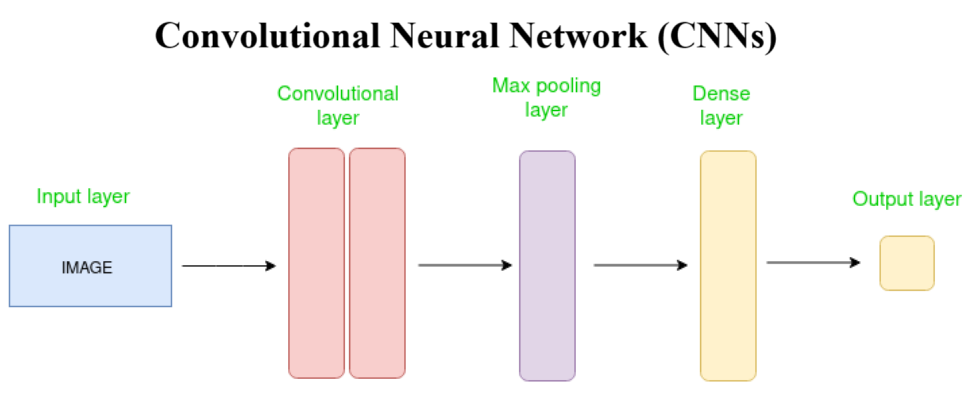
One of the most compelling attributes of CNNs is their layered architecture. These networks are made up of several layers, including convolutional layers, pooling layers, and fully connected layers. The convolutional layers act as filters that detect features such as edges, colors, and textures, while pooling layers reduce the dimensionality of these features, helping to make the computation more efficient. For example, when analyzing an image of a cat, the initial layers may focus on simple patterns like edges or colors, while deeper layers might identify complex features such as the shape of the ears or the unique markings on the fur.
Furthermore, CNNs excel at image recognition. Their capacity to interpret and classify images has profound implications in various fields. In the realm of facial recognition technology, systems powered by CNNs can accurately identify individuals through a combination of facial features. One notable application is in security systems that utilize such technology in smartphones or at airports, enhancing both user convenience and safety.
Applications Across Industries
The versatility of CNNs has prominent implications in diverse sectors. In healthcare, CNNs are utilized in diagnosing diseases via analysis of medical images such as X-rays or MRIs. For instance, studies have demonstrated that CNNs can outperform traditional radiologists in detecting lung cancer from CT scans, potentially leading to faster and more accurate diagnoses.
In the automotive industry, particularly with autonomous vehicles, CNNs play a pivotal role in interpreting surroundings. These vehicles rely on real-time processing of visual data to navigate complex environments safely—detecting pedestrians, reading traffic signs, and avoiding obstacles. Major companies like Tesla and Waymo leverage CNNs to enhance their self-driving capabilities, showcasing how this technology is reshaping transportation.
Finally, in security, CNNs improve surveillance systems’ efficiency, allowing for real-time monitoring and threat detection. Advanced algorithms can analyze live video feeds to recognize unusual activities or unauthorized access, thus enhancing safety measures in public and private spaces.
As we witness rapid advancements in computer vision technologies, grasping the workings and benefits of CNNs is becoming increasingly crucial. This transformative technology not only fosters innovation across multiple domains but also raises intriguing questions about the future capabilities of machines in understanding and interpreting visual data. The journey into the world of CNNs is just beginning, promising exciting developments that could redefine how we interact with the digital world.
DISCOVER MORE: Click here to uncover additional insights
The Mechanics Behind CNNs
To appreciate the transformative impact of Convolutional Neural Networks (CNNs) on computer vision, it’s essential to delve into their mechanics. CNNs mimic the way humans perceive visual information by utilizing a hierarchical structure comprised of multiple layers. Each layer in a CNN serves a distinct purpose, facilitating a progressive understanding of the input data. This modular approach not only enhances efficiency but also allows for remarkable scalability in handling complex datasets.
Layers of Understanding
CNNs can generally be divided into three primary types of layers: convolutional layers, pooling layers, and fully connected layers. Each plays an integral role in building up a robust image understanding framework:
- Convolutional Layers: These layers apply a set of filters to the input image, performing convolution operations that detect various features. Each filter focuses on identifying specific patterns—edges, textures, or colors. As the data passes through multiple convolutional layers, the network becomes adept at recognizing increasingly sophisticated patterns.
- Pooling Layers: Following the convolutional layers, pooling layers optimize the computational process by reducing the spatial dimensions of the feature maps produced. This down-sampling technique not only significantly decreases the number of parameters but also aids in mitigating overfitting by providing an abstracted representation of the features detected.
- Fully Connected Layers: At the end of the hierarchy, fully connected layers take the high-level features extracted by previous layers and use them to classify the input into distinct categories. All neurons from one layer are connected to every neuron in the subsequent layer, enabling the model to make predictions based on the learned features.
The architecture of a CNN allows it to learn features automatically, in contrast to traditional machine learning methods that often require extensive feature engineering. This inherent ability to learn directly from the data empowers CNNs to adapt and excel across various applications.
Real-World Impact of CNNs
As CNNs gain traction across sectors, their practical implications are striking. In the realm of agriculture, for instance, farmers utilize CNNs for crop monitoring. By analyzing aerial imagery from drones, CNNs can assist in identifying plant health deviations and pest infestations, ultimately leading to better yields and sustainability practices. In the world of retail, companies harness CNNs in their e-commerce platforms, utilizing image recognition to enhance product recommendations and streamline user experience.
These advancements highlight that the transformative effects of CNNs extend far beyond recognition tasks; they are reshaping how industries operate and engage with consumers. By leveraging computer vision powered by CNNs, businesses can unlock previously untapped insights and provide increasingly personalized experiences.
As CNN technology continues to evolve, it is crucial to stay informed about the latest developments, as these networks hold the potential to redefine industries and everyday interactions with technology. The future of computer vision and its applications looks incredibly promising, revealing an endless array of possibilities.
| Feature | Description |
|---|---|
| Automated Feature Extraction | Convolutional Neural Networks (CNNs) automate the process of recognizing patterns and features in images, drastically reducing the need for manual feature engineering. |
| High Accuracy in Image Classifications | With their deep learning architecture, CNNs achieve remarkable accuracy in tasks such as image classification, significantly surpassing traditional neural networks. |
| Scalability to Large Datasets | CNNs are capable of analyzing and learning from vast amounts of data, making them ideal for extensive applications in computer vision technology. |
| Versatile Applications | From facial recognition in security systems to autonomous driving, CNNs power a wide range of computer vision applications that enhance user experiences. |
The advantages of Convolutional Neural Networks are multifaceted and highly impactful, fostering innovations in various fields. Their ability to automatically extract features means that researchers and developers can focus more on modeling and less on pre-processing data. The use of CNNs in image classification offers high precision, making them integral to applications needing accurate and swift recognition processes. In addition, due to their structure, CNNs can effectively scale with large datasets without compromising performance, which is critical in today’s data-driven landscape. The versatility of these networks is another significant advantage, as they can be employed in multiple domains, including healthcare, where they aid in diagnosing diseases based on medical imaging, or in retail, enhancing customer experiences through visual search capabilities. With every advancement, the influence of CNNs on transforming computer vision continues to grow, enticing researchers and businesses alike to explore their potential further.
DIVE DEEPER: Click here to discover more insights
The Diverse Applications and Innovations of CNNs
As we dive deeper into the realm of Convolutional Neural Networks (CNNs), their growing spectrum of applications reveals how they are fundamentally altering various fields. Beyond agriculture and retail, industries such as healthcare, automotive, and even security have begun to realize the potential of combining CNNs with their unique operational needs.
Revolutionizing Healthcare
In the world of healthcare, CNNs have emerged as an invaluable tool for medical imaging diagnostics. Traditional diagnostic methods often rely on radiologists interpreting X-rays, MRIs, and CT scans, which can be time-consuming and subjective. However, CNNs can automate this process by identifying pathologies in imaging data, significantly increasing both accuracy and efficiency. Research has demonstrated that CNNs can outperform human radiologists in certain tasks, such as detecting early signs of diseases like breast cancer or pneumonia in chest X-rays. Furthermore, such systems can assist clinicians in triaging cases, thereby improving patient outcomes and streamlining healthcare services.
Transforming Automotive Technology
The impact of CNNs is also profound in the automotive industry, most notably in the development of autonomous vehicles. Here, CNNs play a pivotal role in image recognition systems that help vehicles interpret their environment. From recognizing road signs and pedestrians to detecting obstacles and navigating complex terrains, CNNs enable real-time decision-making processes that are essential for safe autonomous driving. Companies like Tesla and Waymo employ deep learning techniques, utilizing vast amounts of data collected from sensors and cameras to improve their vehicle navigation systems continuously.
Enhancing Security Systems
Security and surveillance applications are another area experiencing rapid advancements thanks to CNNs. Businesses and public institutions deploy video surveillance systems equipped with CNNs to improve security measures. These systems not only analyze live feeds to detect unusual activities but also use facial recognition technologies to identify individuals. The potential applications range from monitoring law enforcement in urban settings to enhancing safety in places like airports and train stations. In fact, CNNs can analyze vast amounts of video footage far more quickly and reliably than human operators, allowing for prompt responses to security threats.
Innovations in Retail Customer Experience
Returning to the sphere of retail, CNN-driven innovations have extended beyond product recommendations to more immersive shopping experiences. For example, retailers are leveraging augmented reality (AR) applications, integrating CNNs to enable virtual try-on features for clothing and accessories. This not only enhances customer experience but also fosters higher conversion rates as consumers gain more confidence in their purchasing decisions. CNNs can also analyze shopper behavior by processing customer images, allowing for tailored marketing tactics and personalized advertising strategies.
The versatility of CNNs is further evidenced by developments in natural language processing (NLP) and image generation. Some cutting-edge models can even generate realistic images based on textual descriptions, blurring the lines between visual and textual comprehension. As these models continue to evolve, researchers anticipate even more groundbreaking CNN applications that can bridge the gap between multiple domains of artificial intelligence.
The cumulative advancements and applications of CNN technology highlight its extraordinary potential to reshape our interactions with machines and the world around us. With ongoing research and development, the landscape of computer vision continues to expand, indicating a future rich with new possibilities and innovations.
DISCOVER MORE: Click here for insights
Conclusion
As we stand on the brink of a technological revolution, Convolutional Neural Networks (CNNs) have undeniably emerged as a cornerstone in the realm of computer vision. Their profound impact spans across various industries, reshaping how we perform tasks that were once seemingly insurmountable. From healthcare advances in medical imaging to innovative applications in automotive technology, these networks facilitate both efficiency and accuracy in operations that were traditionally reliant on human interpretation.
The ongoing evolution of CNNs is a testament to the drive for innovation in fields such as security, where real-time surveillance solutions enhance public safety, and retail, where immersive customer experiences redefine consumer engagement. As CNNs continue to grow in capability, their integration with other technologies, such as augmented reality and natural language processing, opens up exciting frontiers for artificial intelligence. The future may well see a landscape where machines not only interpret images with human-like accuracy but also interconnect with various aspects of our lives seamlessly.
However, this transformation invites further exploration into ethical considerations and the challenges of data privacy. As advancements in CNNs lead to their deployment in increasingly critical domains, the responsibility of creating secure and fair systems must remain at the forefront of development efforts. Engaging in this dialogue will ensure that the progress we make through CNNs enhances the human experience rather than complicates it.
In conclusion, the journey of CNNs in transforming computer vision is just beginning, and as researchers, developers, and industries collaborate, the potential for breakthroughs is limitless. As we look to the future, it is imperative to embrace these advancements while fostering a framework that prioritizes ethical standards and societal benefits.
Related posts:
The Impact of Neural Networks on Natural Disaster Prediction
Convolutional Neural Networks: Transforming Computer Vision
Neural Networks and the Future of Personalized Medicine
Recurrent Neural Networks: Applications in Natural Language Processing
The Evolution of Neural Networks: From Perceptron to Deep Learning
The Role of Neural Networks in the Generation of Art and Music

Beatriz Johnson is a seasoned AI strategist and writer with a passion for simplifying the complexities of artificial intelligence and machine learning. With over a decade of experience in the tech industry, she specializes in topics like generative AI, automation tools, and emerging AI trends. Through her work on our website, Beatriz empowers readers to make informed decisions about adopting AI technologies and stay ahead in the rapidly evolving digital landscape.